
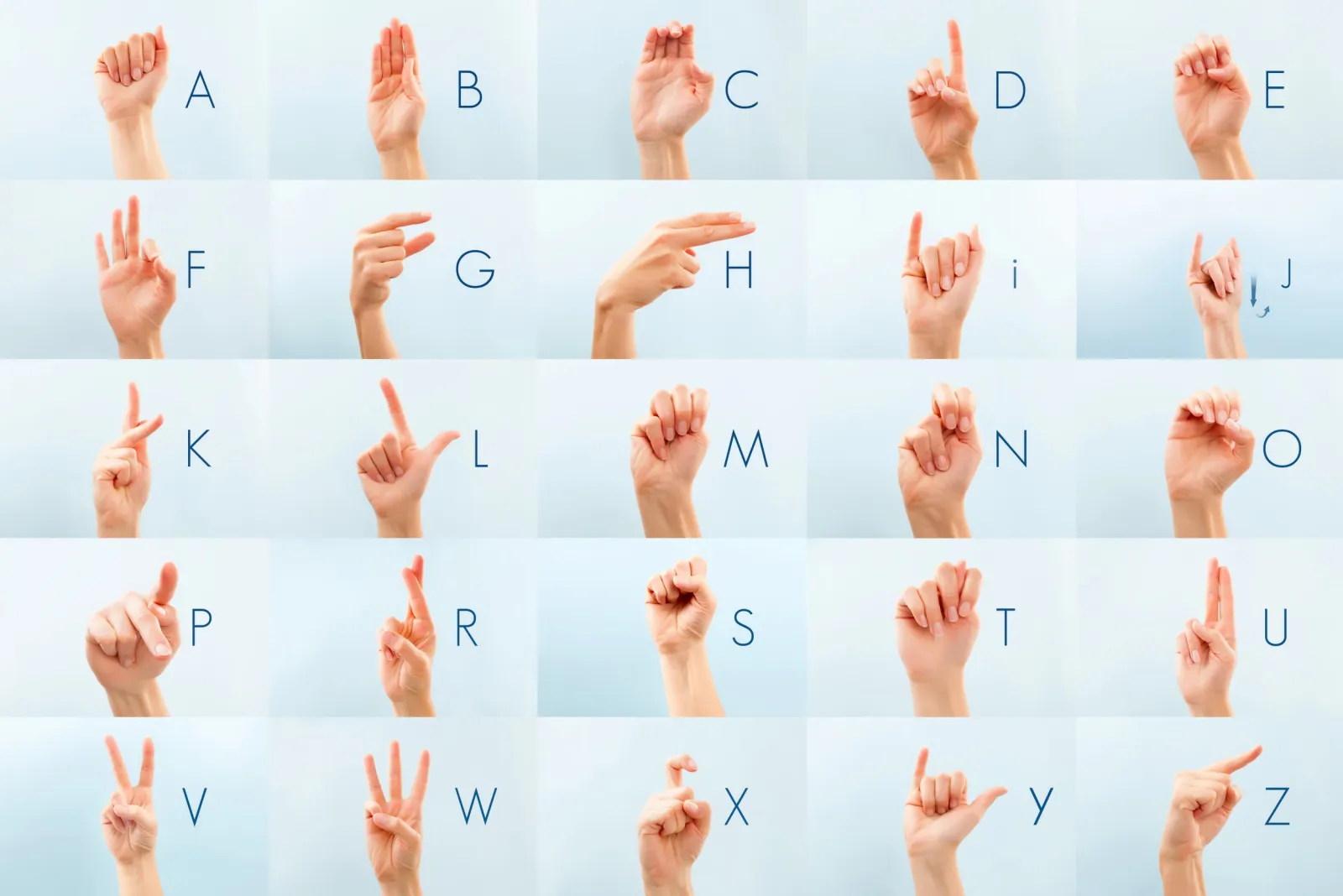
Kenya Sign Language in Nairobi at Ikigai College in 2026
In the middle of a lively café in Westlands, a young man signs fluidly with a friend. Around them, most patrons don’t notice. But one woman at a nearby table watches in awe. She later confesses to her friend, “I’ve always wanted to learn Kenya Sign Language. I just don’t know where to begin.”
That quiet desire—to communicate, to connect across silence is becoming more important globally.
From workplaces to classrooms, from hospitals to courtrooms, the need for Kenya Sign Language (KSL) skills are becoming more useful. Yet the question remains: Where can you learn KSL meaningfully and practically in Nairobi?
A surprising but leading answer? Ikigai College of Interior Design.
Yes, a design college. But here, design is understood in its fullest form: not just visual environments, but inclusive communication. Language, after all, is the design of understanding.
Kenya Sign Language is Becoming more Popular
KSL is not just a communication tool. It is a bridge as it connects over 260,000 deaf individuals in Kenya to a society still catching up with inclusion.
While most learning institutions do not clearly see the importance of KSL in the modern world,Ikigai College of Interior Design, positions KSL as one of its core courses. At the College, KSL is positioned as a serious, community-centered language, one that demands more than gestures. It demands presence, respect, and practice in all fields/professions.
When students enroll here, they don’t just “take a class.” They enter a language culture.
You learn KSL through storytelling, deaf community interaction, role-play simulations, and everyday conversational use. You practice not only how to sign but how to read emotion, respond to silence, and reimagine how people connect without sound.
This isn’t just language learning. It’s human design.
The First Class: Silence, Then Insight
On the first day, you enter the KSL classroom. There are no books. No talking. Your instructor signs their name and gestures for you to copy.
You hesitate. You fumble. You feel unsure.
Then something beautiful happens: your classmates start to follow. You begin to laugh—silently. You’re already communicating. In that moment, something shifts. You’re no longer just learning a language. You’re changing the way you perceive communication itself.
At Ikigai College of Interior Design, this is how KSL is introduced: not as vocabulary, but as an experience.
Instructors are fluent, often Deaf, and always passionate. They don’t just teach signs. They teach deaf culture, etiquette, advocacy, and real-world scenarios—like how to sign in a workplace, a hospital, or a court of law.
This grounding sets Ikigai College apart.
KSL Has Its Own Grammar, which changes Everything
One of the biggest misconceptions about Kenya Sign Language is that it’s simply English or Kiswahili translated into hand movements. It isn’t. KSL is a complete, independent language with its own vocabulary, syntax, and rules — as distinct from English as Dholuo is from Kikamba.
Where spoken English says “Are you going to the market tomorrow?”, KSL restructures the whole thought. Time comes first. Topic comes next. The question marker sits on the face. The result isn’t broken English — it’s a different logic of meaning altogether, one that moves in space rather than in a straight line of sound.
This is why learners who try to memorize signs the way they memories vocabulary lists often stall. You can know two hundred signs and still not hold a conversation, because you haven’t learned how the language thinks.
At Ikigai College of Interior Design, this is addressed from week one. Students are taught KSL structure alongside KSL signs — topic-comment order, spatial referencing, verb directionality. When you sign “she gave it to him,” your hands actually travel between two points you’ve established in the air. The grammar is geometric. For design students especially, this lands instantly: you are composing meaning in three-dimensional space.
Understanding this also protects you from a common disservice, signing in English word order and assuming Deaf people will simply adjust. They shouldn’t have to. Learning true KSL is an act of respect.
The Face Is Not Decoration as it is Grammar
Watch two fluent signers in conversation and you’ll notice something beginners almost always miss: their faces never stop working. Eyebrows lift and drop. Cheeks puff. Lips shape silent syllables. The shoulders angle in and out.
These are non-manual markers, and in KSL they carry grammatical weight that hands alone cannot. Raised eyebrows can turn a statement into a yes-or-no question. A slight head shake running through a sentence negates it. A squint can signal distance, doubt, or intensity. The same handshape can mean “small” or “tiny” depending entirely on what the face does while you produce it.
Hearing learners find this the hardest part and not because it’s technically difficult. It’s because many of us have been socially trained to keep our faces neutral, to appear composed, to avoid “overreacting.” KSL asks you to unlearn that. In the classroom, students often laugh through the first few weeks of exaggerated expression practice, then realize something uncomfortable: their signing was flat because they were flat.
Facial grammar also explains why KSL cannot be properly learned from a phone screen or a printed chart. Static images strip away the very layer that makes a sentence a sentence. You need a living person in front of you, preferably a Deaf instructor, correcting the tilt of your head and the rhythm of your brows.
At Ikigai College of Interior Design, expression work is deliberately built into role-play, storytelling, and the performance lab. By the time students reach the community exchange days, they aren’t just signing accurately but are signing with tone, humor, emphasis, and feeling. That’s the difference between being understood and being heard.
KSL Is Not a Courtesy: It’s a Constitutional Right
Many Kenyans are surprised to learn that Kenya Sign Language is written into the supreme law of the land. It isn’t an informal accommodation or a charitable gesture. It is constitutionally protected.
Article 7(3)(b) of the Constitution of Kenya, 2010 requires the State to promote the development and use of indigenous languages, Kenyan Sign Language, Braille and other communication formats accessible to persons with disabilities. Article 120 goes further still, naming Kiswahili, English and Kenyan Sign Language as the official languages of Parliament — meaning the business of the House may lawfully be conducted in KSL. And Article 54(1)(d) entitles a person with a disability to use sign language, Braille or other appropriate means of communication.
Read together, these provisions place KSL in rare company. Very few countries elevate a sign language to the floor of their national legislature. Kenya does.
The legal framework is still catching up with that ambition, but it is moving. In June 2026 the National Assembly passed the Kenyan Sign Language Bill, 2023, expanding the rights of persons with hearing impairments and strengthening access to sign language services across education, public institutions and other sectors. Among its provisions: Kenyan Sign Language integrated into early childhood and basic education curricula, free interpretation services in public colleges and universities, and a requirement that television stations carry a KSL inset covering at least a third of the screen during news bulletins, educational programs and national events. The Bill also establishes the Kenya Sign Language Council, a statutory body mandated to regulate, develop and preserve the language.
Why does this matter to you as a learner? Because it reframes the entire proposition. Every school, hospital, county office, courtroom, bank, media house and HR department in Kenya has a legal duty to be reachable by Deaf citizens and almost none of them currently have the people to do it.
That gap is where your skills become valuable. A teacher who signs. A nurse who signs. A designer who can build genuinely accessible campaigns. A customer service officer who doesn’t have to turn a Deaf client away.
At Ikigai College of Interior Design, learning KSL isn’t only about personal growth. It’s about stepping into a national shortfall that law, policy and conscience are all pushing to close.
Who is This Course For?
-
A teacher in Nairobi who wants to include Deaf learners in the classroom.
-
A health worker aiming to provide better services to Deaf patients.
-
A creative working in media, marketing, or advertising who wants to develop accessible content.
-
A social worker, law enforcement officer, designer, HR manager, or student seeking inclusive skills.
-
Or someone with Deaf family members or friends, ready to connect deeply and meaningfully.
This course is for anyone serious about inclusion, equity, and human connection.
And yes, it’s beginner-friendly. You don’t need prior experience. Just curiosity, commitment, and a willingness to learn with your whole self.
What Makes Learning KSL at Ikigai College Different?
1. Signing a Story: The Performance Lab
Mid-semester, students gather in a design studio transformed into a performance space. Each learner signs a personal story: a memory, a message, a belief.
One student signs about their sister, born deaf. Another performs the story of navigating public spaces without language access. There are tears. And applause—silent, the Deaf way, hands raised and waving.
This is expression, not just education. A chance to embody the language emotionally.
2. Community Exchange: A Day with Deaf Professionals
Ikigai College regularly hosts Deaf entrepreneurs, artists, teachers, and advocates. Students conduct interviews, fully in KSL. It’s awkward at first. But soon, confidence grows.
By end of day, students are signing jokes, discussing serious topics, and receiving feedback in real time.
You’re not learning KSL in isolation. You’re learning from those who live it.
3. The Field Immersion: Design Meets Deaf Culture
Because Ikigai College is a design school, KSL learning doesn’t happen in a silo. Students are encouraged to integrate their new language skills into creative projects.
For example:
-
A group creates a signage system for a Nairobi clinic, incorporating sign language icons.
-
Another designs an accessibility campaign for social media—entirely in KSL-based video formats.
Language here isn’t just theory. It’s design in action.
“But Why a Design College?”
The better question is—why not?
At Ikigai College of Interior Design, language, design, and inclusion are seen as interconnected. You can’t design spaces, systems, or media without considering who gets left out.
Teaching Kenya Sign Language here ensures that every designer, communicator, educator, and community leader who passes through becomes an inclusion advocate.
Plus, with a culture of creativity, this is one of the few KSL programs where you’re encouraged to use what you learn in your field—be it architecture, branding, customer service, or education.
FAQs: Everything You Wanted to Ask About Learning Kenya Sign Language at Ikigai College
Q: How long is the course and when can I join?
A: The introductory KSL course typically runs for 8 to 12 weeks, with both weekday and weekend options. New intakes open regularly throughout the year. Check with the admissions office for the latest schedule.
Q: Can I learn KSL even if I have no prior sign language experience?
A: Absolutely. The course is designed for complete beginners and taught in a way that gradually builds from fingerspelling to full conversations. By the end, you’ll be able to confidently communicate in everyday situations.
Q: Is this course certified? Can it help my career?
A: Yes. You receive a recognized certificate from Ikigai College of Interior Design. KSL is increasingly valuable in fields like education, healthcare, media, HR, and community development—making it a career asset.
Q: Do I get to interact with the Deaf community?
A: Yes. The course includes immersion days, mentorship opportunities, and guest sessions with Deaf professionals. You’ll also learn about Deaf culture and etiquette—essential for respectful, meaningful interaction.
Q: Is the course only for design students?
A: No. While Ikigai College of Interior Design is a design-focused institution, this course is open to learners from all backgrounds—NGO workers, business professionals, teachers, and anyone interested in KSL.
Q: What happens after the basic course?
A: Advanced courses and specialized workshops are available, including storytelling in KSL, translation techniques, and accessibility design. Many learners go on to volunteer, teach, or integrate KSL into their work.
The First Step Toward Inclusion Starts with Your Hands
Learning Kenya Sign Language isn’t about perfection. It’s about presence.
At Ikigai College of Interior Design, you’ll learn more than a new language. You’ll learn how to pause, pay attention, communicate beyond words, and how to connect with the deaf in the community.
In a city as dynamic as Nairobi, KSL is a very important asset as it is proven to be useful in almost all professions.
Classes are open. Sign up. Start signing. Start changing lives—including your own.
Quick Links
Learn More about KSL
Visit Ikigai College Admissions Page
Apply Now for KSL Course

No Responses