

January 2027 Intake: Courses, Requirements and How to Apply
The January 2027 Intake at Ikigai College is an opportunity for school leavers, career changers and working professionals to begin developing practical skills for their future careers. Applications are ongoing for students interested in joining our creative, technical and communication programs in Nairobi.
At Ikigai College, we believe education should go beyond classroom theory. Our approach emphasizes practical learning, creativity, technical competence and skills that students can apply in the workplace, in business or in further studies.
For the January 2027 intake, students can explore programs including Interior Design, Graphic Design, Construction Management and Kenya Sign Language (KSL). Depending on the program and the applicant’s qualifications, training opportunities are available at different levels, certificate and diploma.
If you are planning to join us in January 2027, start by reviewing our admission requirements. Once you have selected your preferred program, you can proceed to the Ikigai College online application form.
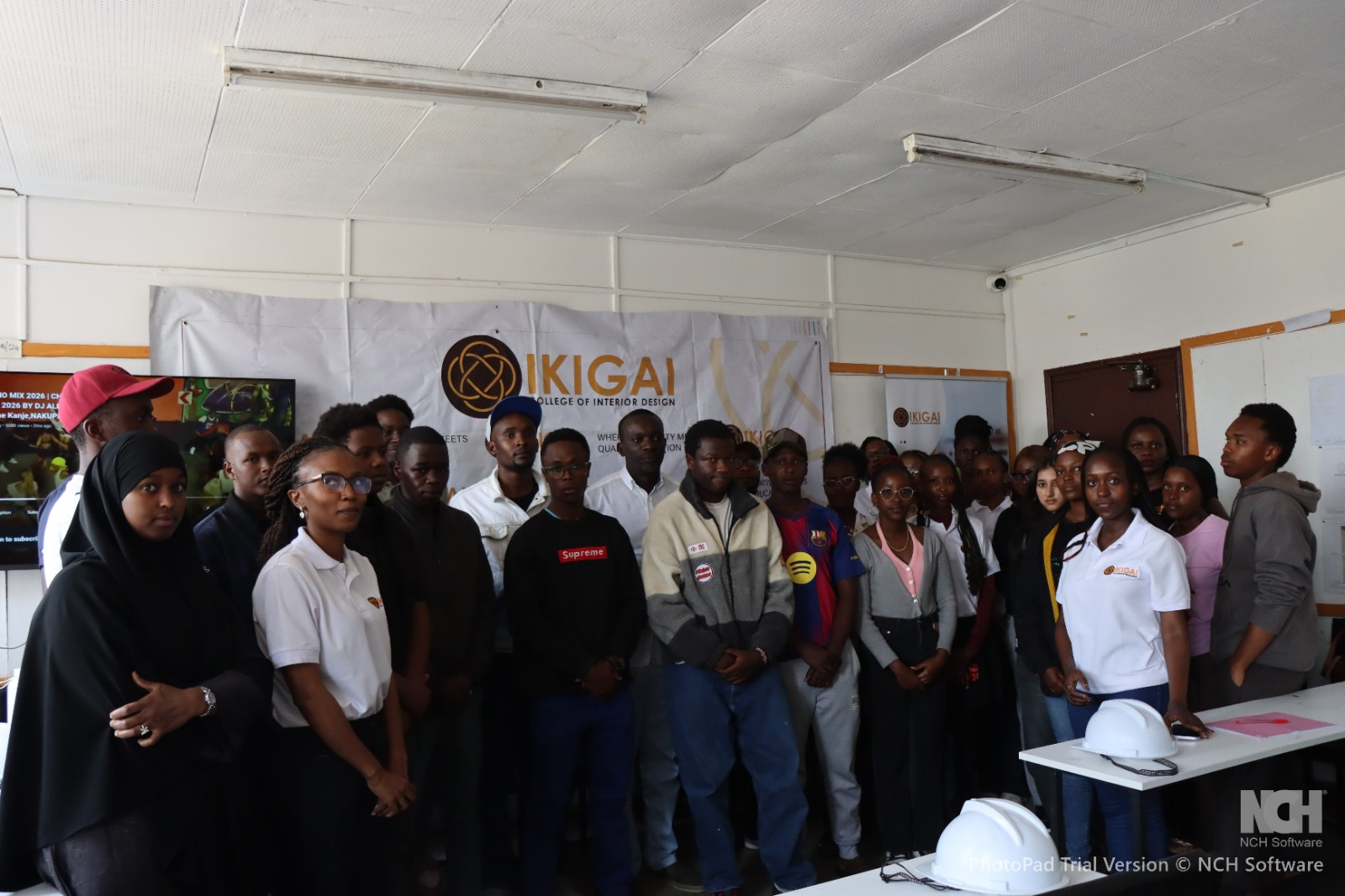
Most Popular Courses Available for the January 2027 Intake at Ikigai College
The January intake gives learners an opportunity to start the year by working towards a professional qualification. Below are four of the programs prospective students can consider.
1. Interior Design
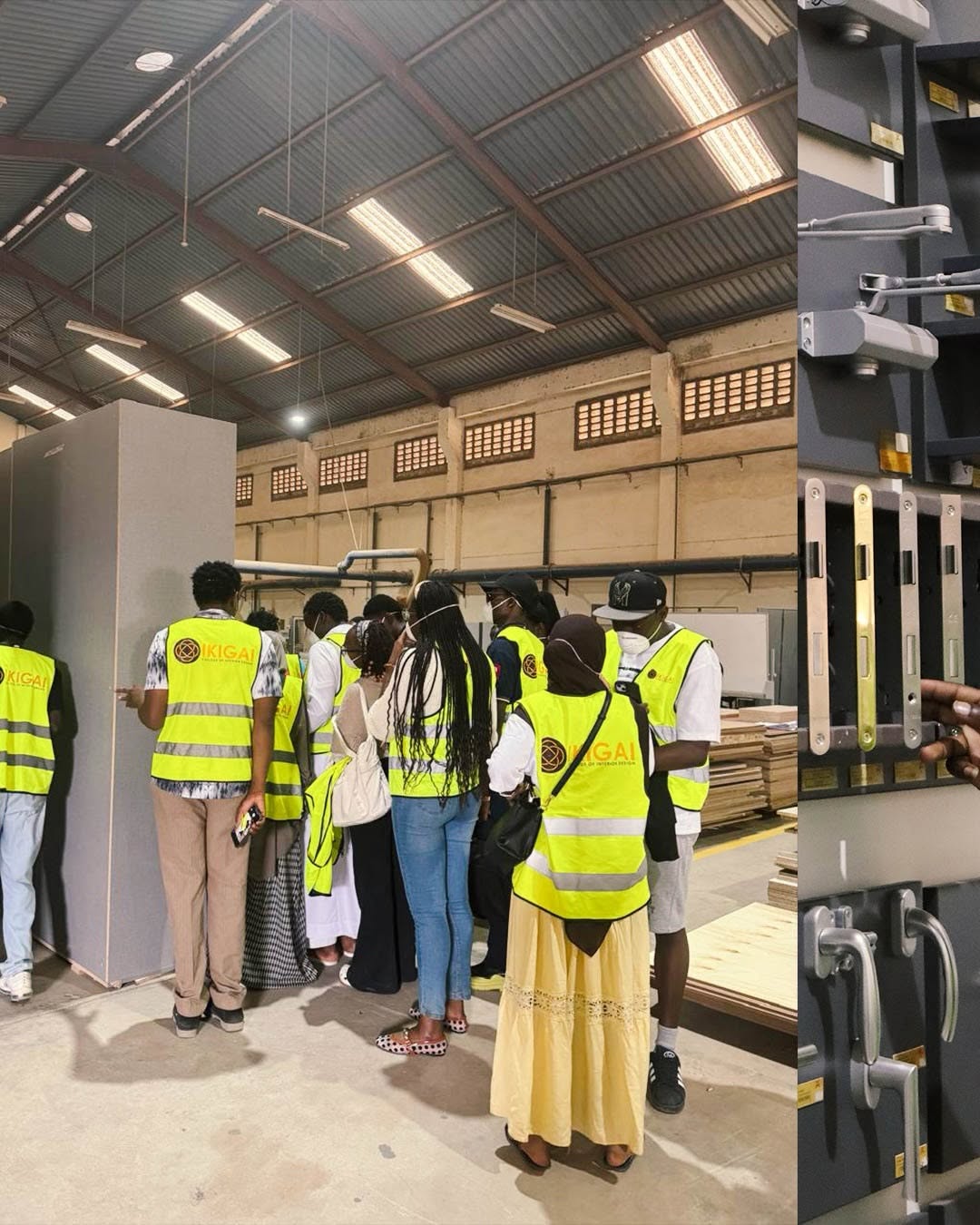
Interior Design at Ikigai College is designed for creative learners who are interested in transforming indoor environments into spaces that are attractive, functional, comfortable and suitable for their intended users. Interior design goes beyond decorating rooms. It brings together creativity, technical drawing, space planning, materials, furniture, lighting, color, construction knowledge and digital design.
Students learn how to understand a client’s needs and translate those requirements into practical design solutions. Training can introduce learners to areas such as design principles, color theory, technical drawing, space planning, furniture and fixtures, lighting, materials and finishes, computer-aided design and presentation techniques. As learners advance, they can work on residential, commercial, hospitality and other interior environments.
Practical work is particularly important because an interior designer needs to be able to communicate an idea visually and technically. Students may therefore develop drawings, mood boards, material selections, layouts, presentations and digital visualizations. Project work also helps learners build a portfolio that demonstrates their abilities to prospective employers and clients.
Certificate in Interior Design
The Certificate in Interior Design provides a pathway for learners who want to establish a strong foundation in the field. Students develop essential skills in areas such as space planning, color coordination, drawing, materials, furniture, lighting and design presentation. The certificate can be particularly suitable for learners who are beginning their professional design education and want to develop practical abilities before progressing further.
At Ikigai College, certificate programs generally take approximately one year. Students who successfully complete the appropriate certificate program may also consider progressing to a diploma, subject to the applicable progression and admission requirements.
Diploma in Interior Design
The Diploma in Interior Design provides more extensive training for learners preparing for professional practice. Diploma students move beyond basic design principles and explore more complex residential, commercial and other interior projects. Training may cover advanced space planning, computer-aided design, construction detailing, project management, sustainable design, client consultation, budgeting and portfolio development.
The diploma pathway is particularly suitable for students who want to pursue careers such as interior designer, space planner, design consultant, furniture designer, 3D visualization artist, interior project coordinator or design entrepreneur. Ikigai College’s diploma programs generally run for approximately two years.
If designing spaces is where your creativity lies, explore the full Interior Design course, review the admission requirements and submit your January 2027 Online application Form.
2. Graphic Design

Graphic Design at Ikigai College is a creative and technology-driven program for learners interested in communicating ideas through visual content. Almost every modern organization needs visual communication in some form. Businesses need logos and branding, companies need marketing materials, organizations communicate through social media, and digital platforms require attractive and functional visual content.
Graphic design students learn how typography, color, images, illustrations, shapes and layouts can be combined to communicate a clear message. Instead of simply learning how to operate design software, students develop an understanding of why particular visual decisions work and how design can solve communication problems.
Training may include design fundamentals, typography, color theory, branding, logo design, digital illustration, advertising design, publication design, packaging, social media graphics and digital media. Students can also gain practical experience with commonly used design tools such as Adobe Photoshop, Illustrator and InDesign, alongside other relevant digital design platforms.
Certificate in Graphic Design
The Certificate in Graphic Design provides a practical introduction to visual communication. It helps learners develop fundamental design and software skills while completing projects such as posters, logos, advertisements, social media graphics and basic brand materials.
The certificate pathway can suit learners who want to enter the creative industry, develop skills for self-employment or build a foundation before advancing to diploma-level study. At Ikigai College, certificate programs generally run for approximately one year.
Students are encouraged to develop a portfolio throughout their studies. A portfolio is particularly valuable in graphic design because employers and clients often want to see what a designer can produce in addition to reviewing academic qualifications.
Diploma in Graphic Design
The Diploma in Graphic Design provides broader and more advanced preparation for professional creative work. Learners can develop deeper knowledge in areas such as branding and identity systems, publication design, advertising, digital media, motion graphics, UI design, creative direction and professional portfolio development.
Diploma training can also help students understand the business side of creative work. This may include responding to client briefs, presenting concepts, managing projects, preparing professional portfolios and understanding entrepreneurship. Ikigai College diploma programs generally take approximately two years.
Graduates can explore opportunities as graphic designers, brand designers, digital illustrators, social media designers, packaging designers, multimedia designers, UI/UX designers, advertising creatives and freelance designers. Others may choose to establish their own design studios or creative businesses.
Learn more about our Graphic Design course. You can also check our admissions information before completing the online application form for the January 2027 intake.
3. Construction Management
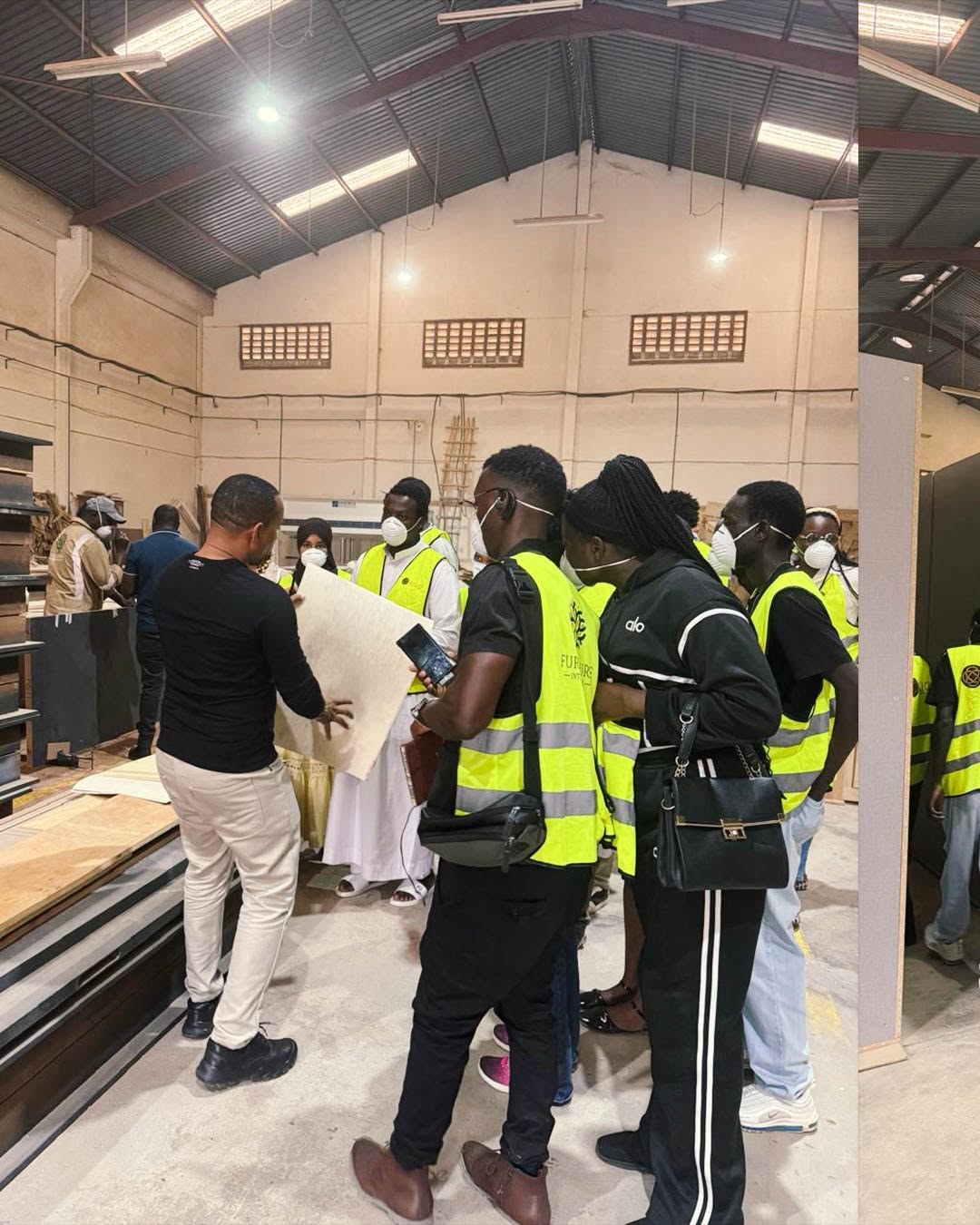
Construction Management at Ikigai College is a built environment program for learners interested in understanding how construction projects are planned, organized, coordinated and supervised. A building project requires more than materials and labor. It requires people who can coordinate resources, monitor schedules, control costs, maintain quality and help ensure that work progresses according to plans and requirements.
Construction management combines technical construction knowledge with planning, communication, leadership and management. Students can learn about building materials, construction technology, project planning, site operations, budgeting, estimating, scheduling, health and safety, quality control and resource management.
Another important aspect of the program is understanding construction drawings and documentation. Construction managers frequently work with architects, engineers, quantity surveyors, contractors, suppliers, technicians and clients. Students therefore need to understand how different construction professionals contribute to a project and how their work must be coordinated.
Certificate in Construction Management
The Certificate in Construction Management provides learners with foundational and practical knowledge of construction operations. It can introduce students to construction methods, building materials, basic estimating, project scheduling, site supervision, construction drawings, safety and quality control.
This level can be suitable for learners who want an entry pathway into the built environment or who want to establish a foundation before progressing to more advanced study. The certificate can also help students understand how construction sites operate and the responsibilities involved in coordinating people, materials, equipment and activities.
Certificate programs at Ikigai College generally take approximately one year.
Diploma in Construction Management
The Diploma in Construction Management develops more advanced knowledge for managing construction activities and projects. Students can study areas such as advanced project planning, construction technology, cost control, contract administration, procurement, risk management, sustainable construction, site management and leadership.
The program is particularly relevant for learners who enjoy planning, problem-solving and coordinating people and resources. Diploma-level training can prepare graduates for opportunities such as site supervision, project coordination, construction planning, estimating, contract administration, property development support and construction entrepreneurship. Actual job eligibility will depend on the employer, professional requirements and the graduate’s experience.
Ikigai College diploma programs generally run for approximately two years, allowing learners to build both technical and management skills.
Explore the full Construction Management course. Prospective students should also review our current admission requirements and use the online application form to apply for the January 2027 intake.
4. Kenya Sign Language (KSL)
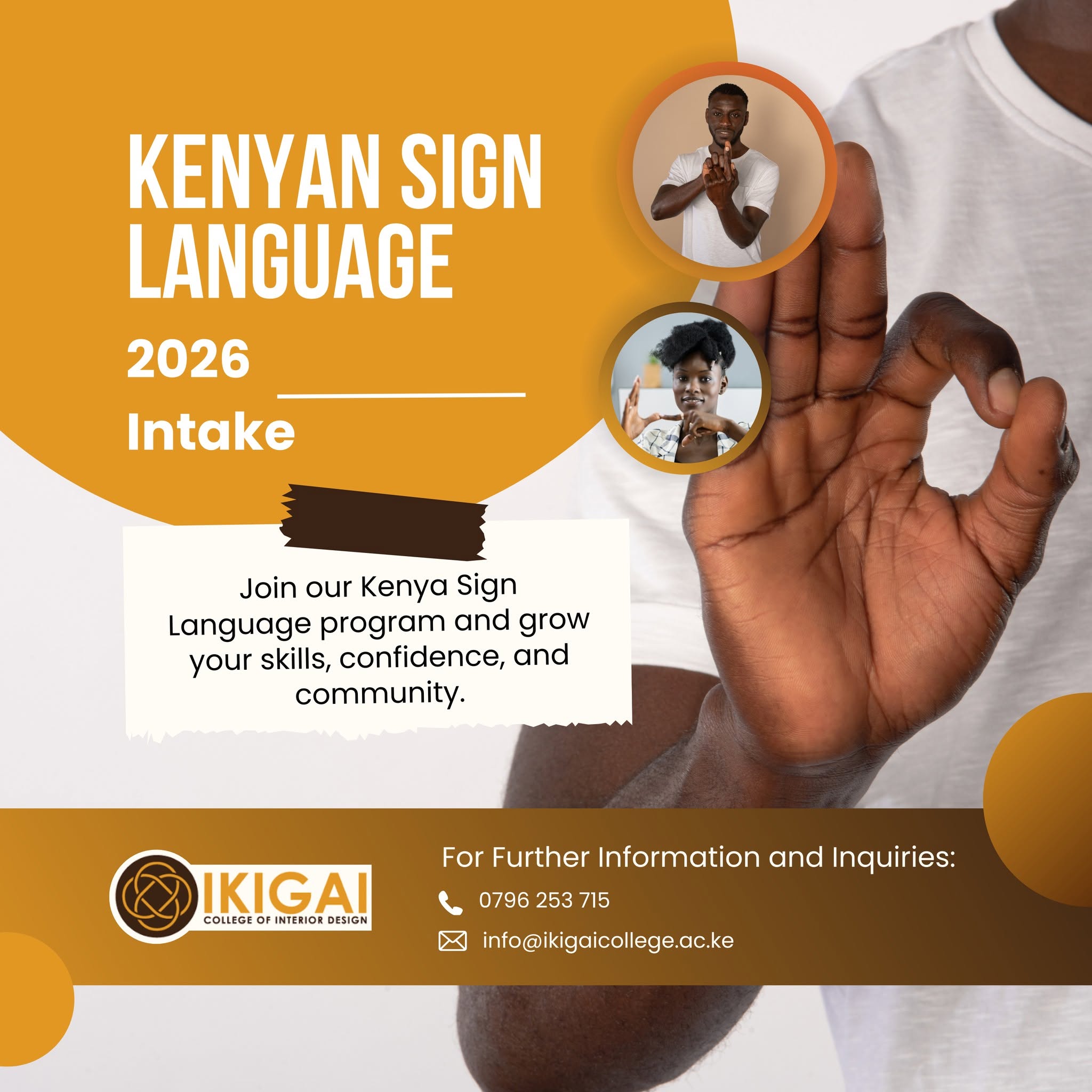
Kenya Sign Language (KSL) at Ikigai College is a practical program designed for learners who want to communicate effectively with the Deaf community and develop valuable skills for education, healthcare, social work, customer service, government, NGOs and other professional environments.
The course is suitable for complete beginners as well as learners who already have some knowledge of Kenya Sign Language and want to improve their proficiency. Rather than placing every learner at the same stage, our KSL training progresses through Beginner, Intermediate and Advanced levels. This structure allows students to develop their skills progressively from basic communication to conversational proficiency and more specialized use of KSL.
Level 1: Beginner Level – Foundations of Kenya Sign Language
The Beginner Level is the starting point for students who have little or no previous knowledge of Kenya Sign Language. Learners are introduced to the foundations of KSL and begin developing the vocabulary and visual communication skills required for everyday interactions.
At this level, students learn the KSL alphabet, fingerspelling, numbers, greetings, introductions and commonly used vocabulary. They also learn how to construct basic sentences and participate in simple everyday conversations.
Learning KSL involves much more than hand signs. Students are therefore introduced to the importance of facial expressions, body language and other non-manual signals that contribute to meaning in sign language.
Deaf culture and communication etiquette are also introduced at this stage. This helps learners understand how to communicate respectfully and effectively with members of the Deaf community.
By completing the Beginner Level, students should have developed a foundation that allows them to participate in basic KSL conversations and prepares them to progress to the Intermediate Level.
Level 2: Intermediate Level – Conversational and Professional KSL
The Intermediate Level builds on the skills developed during beginner training. At this stage, students move beyond basic vocabulary and focus more strongly on conversational proficiency.
Learners expand their vocabulary, improve their sentence structures and develop greater confidence when communicating in different situations. Role-playing and practical exercises can be used to simulate real-life environments such as workplaces, schools, healthcare facilities and customer-service settings.
Students also develop a deeper understanding of Deaf etiquette, Deaf community needs and cultural competency. These areas are important because becoming proficient in Kenya Sign Language involves understanding both the language and the community in which it is used.
The Intermediate Level also introduces learners to the professional application of KSL. For example, students may practice signs and vocabulary relevant to education, healthcare, customer service and workplace communication.
Students can also begin developing an understanding of Kenya Sign Language interpretation. This provides an important foundation for learners who intend to progress to advanced training or eventually pursue opportunities that require higher levels of KSL proficiency.
Level 3: Advanced Level – Fluency and Specialized KSL
The Advanced Level is intended for learners who have developed a strong foundation in Kenya Sign Language and want to improve their fluency or use KSL in more specialized and professional situations.
At this stage, students work with more complex sentence structures, advanced vocabulary and sign storytelling. The focus moves towards communicating ideas naturally, accurately and confidently rather than simply recalling individual signs.
Advanced learners may also develop interpretation and translation skills. This includes practicing how spoken information can be communicated through Kenya Sign Language and how signed communication can be interpreted for hearing audiences.
Professional applications become particularly important at this level. Students may develop specialized KSL skills relevant to sectors such as healthcare, education, legal services, customer service and other professional environments.
The Advanced Level can also include public speaking and presentation skills in sign language, helping students communicate effectively with larger audiences and in more formal settings.
Practical Kenya Sign Language Training
All three levels emphasize practical learning. Kenya Sign Language cannot be mastered through theory alone, so learners need regular opportunities to sign, observe and participate in real conversations.
Training at Ikigai College may therefore include role-playing exercises, interactive conversations, live practice sessions, real-world communication scenarios and interaction with Deaf mentors and professionals. These activities help students develop both confidence and practical fluency.
Flexible KSL Learning Options
Ikigai College offers flexible study arrangements to accommodate students and working professionals. Depending on the program schedule, learners can access full-time, part-time, evening and weekend classes. Corporate KSL training can also be provided for organizations interested in improving communication and accessibility within their workplaces.
KSL Certification and Progression
Students receive certification after successfully completing the applicable Kenya Sign Language training. Learners can begin at the appropriate level and progress from Beginner to Intermediate and eventually Advanced KSL as their skills improve.
The amount of time required to learn KSL depends on the level and mode of study. Ikigai College’s KSL programs range from short-term training for basic skills to more comprehensive training for learners seeking advanced proficiency.
For learners who only need introductory communication skills, the Beginner Level provides an accessible starting point. Those who want stronger conversational abilities can progress to Intermediate training, while learners interested in professional and specialized communication can continue to the Advanced Level.
Who Should Study Kenya Sign Language?
KSL training can benefit people from many different professional and personal backgrounds. It is particularly useful for teachers, healthcare professionals, social workers, government employees, customer-service professionals, students, caregivers, community workers and people working with NGOs.
Learning KSL can also benefit anyone who regularly interacts with Deaf individuals or simply wants to contribute to more accessible and inclusive communities.
Join the Kenya Sign Language January 2027 Intake
The January 2027 Kenya Sign Language intake at Ikigai College gives new and continuing learners an opportunity to develop practical communication skills at the appropriate level. Complete beginners can start with the foundations of KSL, while learners with previous knowledge can progress towards intermediate or advanced proficiency.
Learn more about the Kenya Sign Language course at Ikigai College, check our admissions information, or complete the online application form to apply for the January 2027 intake.
Certificate or Diploma: Which Level Should You Choose?
The right level depends on your academic qualifications, career goals and previous training. Certificate programs are generally suitable for students who want to develop foundational knowledge and practical skills. They can also provide a progression pathway for students who intend to continue to a diploma later.
Diploma programs provide more extensive training and are designed for students seeking broader professional preparation. At Ikigai College, certificate programs generally take about one year, while diploma programs generally take about two years.
Applicants should not select a level based only on duration. Your KCSE qualification and program-specific requirements should also be considered. Visit our Admissions page for the latest requirements before submitting your application.
January 2027 Intake Admission Requirements
Admission requirements depend on the level and program selected. As a general guide, Ikigai College currently requires a KCSE mean grade of D (plain) for certificate applicants and a KCSE mean grade of C- (minus) for diploma applicants. Course-specific requirements may apply.
Because admission policies and program requirements can be updated, applicants for the January 2027 intake should confirm their eligibility through the official Ikigai College Admissions page before applying.
How to Apply for the January 2027 Intake
- Choose your course. Decide whether you want to study Interior Design, Graphic Design, Construction Management, Kenya Sign Language or another available Ikigai College program.
- Check your admission requirements. Visit the Admissions page and confirm the requirements for your chosen program and level.
- Complete your application. Open the Ikigai College Online Application Form and provide the requested information.
- Select January as your intake. When completing the application, indicate that you want to join the January intake.
- Wait for admission guidance. Our admissions team will provide further information about your application and the next steps where applicable.
Why Join Ikigai College in January 2027?
Starting your studies during the January 2027 intake allows you to begin the new year with a clear academic and career direction. Our programs focus on practical learning so that students develop abilities they can apply beyond the classroom.
Interior Design students work on creative and technical design skills. Graphic Design learners develop visual communication and digital creativity. Construction Management students learn how building projects are planned and coordinated, while Kenya Sign Language students develop communication skills that can contribute to more accessible and inclusive communities.
Whichever path you choose, the goal is to develop knowledge, confidence and practical competence that can support your future career, entrepreneurship or further education.
Related Intake Articles
- Courses to Join After KCSE – Ikigai College Intake Guide
- Graphic Design Intake at Ikigai College
- Construction Management Intake at Ikigai College
- Kenya Sign Language Intake at Ikigai College
- How to Enroll for an Interior Design Course at Ikigai College
Explore Each Course
- Interior Design Course
- Graphic Design Course
- Construction Management Course
- Kenya Sign Language Course
Frequently Asked Questions About the January 2027 Intake
When is the next intake at Ikigai College?
Ikigai College has major intakes in January, May and September. Students interested in beginning their studies at the start of the year can apply for the January 2027 intake. Check our Admissions page for current enrollment information.
Is the January 2027 intake open for applications?
Applications for the January 2027 intake can be submitted through the Ikigai College Online Application Form. Applicants are encouraged to apply early so that they have enough time to complete the admission process before classes begin.
Which courses can I study during the January 2027 intake?
Prospective students can explore programs including Interior Design, Graphic Design, Construction Management and Kenya Sign Language, alongside other programs available at Ikigai College.
What grade do I need to join a certificate course?
Ikigai College’s current general admissions information indicates that certificate applicants should have a KCSE mean grade of D (plain). Applicants should confirm the current and course-specific requirements on the Admissions page.
What grade do I need to join a diploma course?
The current general requirement for diploma admission is a KCSE mean grade of C- (minus). Students with relevant certificate qualifications may also have progression opportunities depending on the program. Always confirm the latest requirements before applying.
How long does a certificate course take at Ikigai College?
Certificate programs generally take approximately one year. The exact duration may depend on the program, so students should confirm their course structure during admission.
How long does a diploma course take?
Diploma programs at Ikigai College generally take approximately two years. This gives students time to develop broader theoretical, technical and practical knowledge in their selected field.
Can I apply online for the January 2027 intake?
Yes. You can submit your details through the Ikigai College Online Application Form. Select the program you are interested in and choose the appropriate intake when completing the form.
Can I join a diploma after completing a certificate?
Progression from certificate to diploma may be possible where the relevant academic and program requirements are met. Students who plan to use this route should speak with the admissions department to confirm the progression requirements for their chosen course.
Where is Ikigai College located?
Ikigai College is located at 8th Floor, Cianda House, Koinange Street, Nairobi, Kenya. Applicants can apply online or contact the college for further admission guidance.
How do I secure my place for the January 2027 intake?
Begin by reviewing the admission requirements. Once you have chosen your course and confirmed that you meet the relevant requirements, complete the online application form and follow the instructions provided by the admissions team.
Apply for the January 2027 Intake at Ikigai College
Your choice of course can be the beginning of a new professional direction. Whether your passion is transforming spaces through Interior Design, communicating ideas through Graphic Design, coordinating building projects through Construction Management or promoting inclusive communication through Kenya Sign Language, the January 2027 intake gives you an opportunity to begin developing practical skills for your future.
Turn your passion into a profession.
Explore our January 2027 admissions information or apply online to Ikigai College today.

No Responses