
Best Accredited TVET Colleges in Nairobi for Interior Design: Where to Study
Finding Accredited TVET Colleges in Nairobi for Interior Design college in Nairobi is not easy. Notably, finding one that offers the right qualification, provides practical training and operates within Kenya’s TVET system requires a little more research.
Consequently, students comparing accredited TVET colleges in Nairobi should not begin their search with fees alone. Start by asking three questions: Is the institution currently registered? What Interior Design qualification will I receive? And how much practical design work will I complete before graduating?
This guide approaches the search from that perspective as we look at some of the Nairobi institutions where prospective Interior Design students can begin their research, the differences between training levels and what you should verify before submitting an application.
Quick Comparison of Interior Design Colleges in Nairobi
If you are beginning your college search, the table below provides a quick starting point. Program structures can change, so confirm the current qualification directly with the institution before enrolling.
| College | Location | Interior Design Pathway | Best Starting Point |
|---|---|---|---|
| Ikigai College of Interior Design | Cianda House, Koinange Street, Nairobi CBD | Certificate and Diploma | Students seeking practical, career-focused Interior Design training |
| Buruburu Institute of Fine Arts | Mumias South Road, Buruburu Phase 3 | Level 5 and Level 6 | Students interested in an arts-focused learning environment |
| Nairobi Institute of Technology | 10 Westlands Rd, Nairobi | Interior Design training with Level 5 progression | Students looking for design training within a technical institution |
| NIBS Technical College | Aghro House, Moi Avenue, Nairobi | Interior Design Level 5 and Level 6 pathways | Students comparing competency-based programs |
| Sanuk College of Arts and Design | Next to Unga House, off Muthithi Road / Mpaka Road | Design-related training | Students interested in creative and built-environment training |
| Evelyne College of Design | Maji Mazuri Road / Olenguruone Avenue, Lavington | Interior Design and creative training | Students comparing specialist design institutions |
| AlphaTech Training Institute | Agriculture House, 7th Floor, Harambee Avenue, Nairobi CBD | Interior Design-related training | Students looking for a CBD-based training institution |
The table should be treated as a starting point rather than a substitute for verification. Before paying fees, confirm the institution’s current status and ask specifically about the qualification you intend to pursue.
First Things First: What Does TVET Accreditation Actually Tell You?
The words “accredited college” appear frequently in advertisements, but students should understand what they mean before choosing an institution.
Technical and vocational education and training institutions in Kenya are regulated by the Technical and Vocational Education and Training Authority (TVETA). The authority maintains a register where prospective students can check institutions that have been registered and licensed.
You can perform this check yourself through the TVETA accredited institutions register.
When researching accredited TVET colleges in Nairobi, search the official name of the institution rather than relying only on statements appearing in advertisements.
There is another distinction students should understand. Confirming that a college is registered is one step; confirming the details of the specific Interior Design qualification you want to pursue is another. Ask about the course level, curriculum, examining or awarding body, duration and progression opportunities.
Where in Nairobi Can You Study Interior Design?
Your preferred location may influence your college choice, especially if you will commute to classes every day. Interior Design institutions are found in different parts of Nairobi, including the CBD, Westlands and Buruburu.
Accredited Tvet Colleges in Nairobi CBD
The CBD can be convenient for students travelling from different parts of Nairobi and neighboring counties because of the availability of public transport.
Ikigai College of Interior Design is one of the options in the city center. We are located at Cianda House along Koinange Street.
Our location is also relevant to the nature of the course. Nairobi CBD and surrounding areas contain furniture businesses, offices, commercial interiors, material suppliers, construction-related businesses and other activities connected to the built environment.
Other colleges based in the CBD include NIBS and AlphaTech Training Institute.
Accredited Tvet Colleges in Westlands and Lavington
Students who prefer Westlands and Lavington can explore Nairobi Institute of Technology and Evelyne College. NIT provides technical and creative programs and has offered Interior Design training through competency-based pathways.
Westlands is also an active commercial district with offices, hospitality businesses, retail spaces and property developments. These types of environments provide useful examples of how commercial Interior Design differs from residential work.
Buruburu and Eastlands
Buruburu Institute of Fine Arts provides another option away from the city centre. Unlike institutions covering a broad range of technical subjects, BIFA has a strong connection to fine arts and creative education.
This can appeal to learners who want their Interior Design education to take place alongside other artistic disciplines.
Certificate, Diploma, Level 5 or Level 6: What Should You Choose?

This is one of the most important questions to answer before comparing colleges.
You may find institutions describing their programs using terms such as Certificate, Diploma, Level 5 and Level 6. Do not select a program simply because one title sounds more advanced than another.
Instead, ask the admissions office to explain the qualification, entry requirements, assessment system, progression route and awarding or examining body.
Starting with Interior Design at Certificate or Level 5
A foundational pathway can introduce learners to the principles and practical skills used in Interior Design.
A beginner may need to learn how to interpret spaces, develop concepts, communicate ideas through drawings and understand relationships between color, furniture, lighting, materials and human activities.
As these competencies develop, students can work on increasingly complex design problems.
Progressing to Diploma or Level 6 Training
Students seeking more extensive professional preparation can consider higher-level Interior Design training.
At this stage, the work can become more detailed and demanding. Students may need to combine technical considerations with creativity while working on larger or more complex design projects.
For example, designing a bedroom and developing an interior proposal for a restaurant present very different challenges. Commercial projects may require consideration of customer movement, capacity, furniture arrangement, lighting, branding, durability and maintenance in addition to appearance.
At Ikigai College, students can pursue a certificate or diploma in Interior Design through. Consequently, prospective learners can check our admissions information to determine which pathway is appropriate for them.
A Closer Look at Nairobi’s Interior Design College Options
Instead of ranking institutions from “best” to “worst,” it is more useful to consider what distinguishes the different learning environments available in Nairobi.
Ikigai College of Interior Design: A Specialist Design Environment
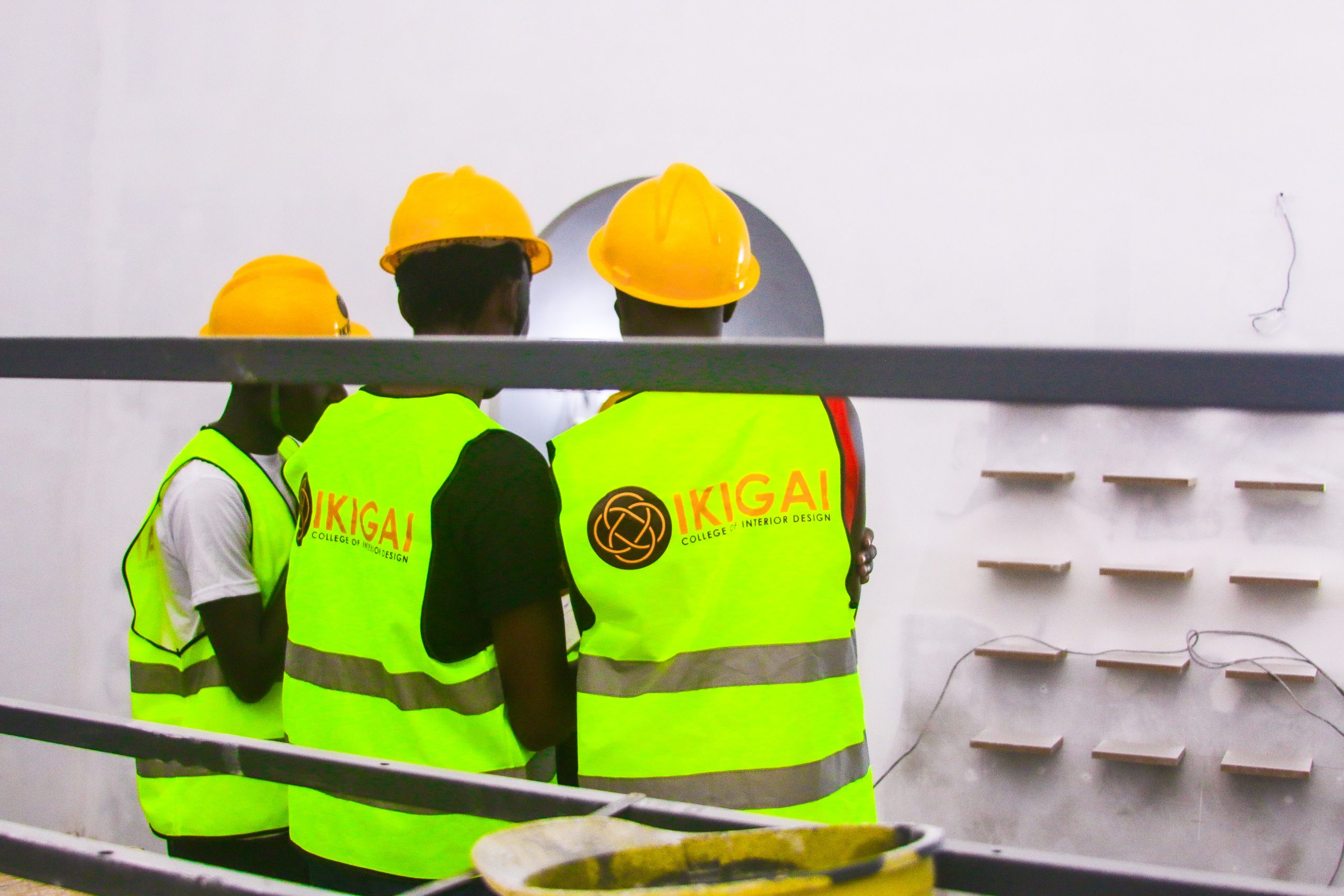
Students who already know that they want to pursue a creative or built-environment career may prefer studying in an institution where those fields form a central part of the learning environment.
At Ikigai College, Interior Design is one of our core programs. Our approach places emphasis on practical, career-oriented learning rather than treating Interior Design as a purely theoretical subject.
Why does that matter?
Imagine that a client gives you an empty apartment and asks you to transform it into a comfortable home. Knowing the definition of balance, rhythm or color harmony is not enough. You must be able to measure and understand the space, identify the client’s needs, develop a concept, plan furniture placement, select suitable materials and communicate the final idea effectively. That movement from idea to practical solution is central to developing as a designer. Students at Ikigai can pursue Certificate and Diploma training while developing skills applicable to real design work.
Those interested in joining can proceed directly to the Ikigai College online application form.
BIFA: Interior Design Within a Fine Arts Setting
Buruburu Institute of Fine Arts offers a different learning context. Its identity is strongly connected with art and design.
For Interior Design students, studying in an arts-oriented environment can encourage experimentation with concepts, visual communication and creative thinking.
BIFA has provided Interior Design training through Level 5 and Level 6 pathways. Prospective students should check the latest intake information and program structure directly with the institution.
NIT: Combining Design and Technical Training
Nairobi Institute of Technology provides another type of environment: Interior Design sits alongside other technical and design programs.
This may suit students who want to learn within an institution that combines creativity with technical education.
NIT has offered competency-based Interior Design training, including a Level 5 pathway with opportunities for further progression.
NIBS: Interior Design Within a Larger TVET College
NIBS differs again because it offers programs across numerous career areas rather than concentrating exclusively on design.
Interior Design learners can therefore study within a broader technical college environment.
Its Interior Design pathways have included areas such as space planning, technical drawing, materials, decoration, visualization and other competencies associated with creating interior spaces.
Other Nairobi Design Colleges to Investigate
Students may also encounter institutions such as Sanuk College of Arts and Design, Evelyne College of Design and AlphaTech Training Institute while researching Interior Design courses in Nairobi.
Rather than assuming that every program advertised online has the same status, contact each institution and ask for the exact name of the current qualification, level, examining body and admission requirements. Then compare that information with the relevant official records.
Don’t Choose an Interior Design College Until You Ask These Questions
A college visit is an opportunity to investigate rather than simply collect a fee structure. Before making your decision, ask the admissions team questions such as:
- What exact Interior Design qualification will I receive?
- Is the institution currently registered and licensed?
- Which body examines or awards the qualification?
- Is the program Certificate, Diploma, Level 5 or Level 6?
- How much of the course involves practical work?
- Which Interior Design software will I learn?
- Will I complete projects that can be included in my portfolio?
- Does the program include industrial attachment or industry exposure?
- Can I progress to another qualification after completing this level?
- What additional materials or equipment will I need during the course?
The answers make it easier to compare accredited TVET colleges in Nairobi on factors that actually affect your education.
What Should Be Inside an Interior Design Course?
Course structures differ, but there are several competencies that aspiring designers should expect to develop during their training.
Space Planning
A beautiful room that is difficult to use is not a successful design. Students need to understand circulation, furniture arrangement, dimensions and how different activities influence the organization of a space.
Technical Drawing
Designers communicate ideas to clients and other professionals through drawings. Developing the ability to represent spaces accurately is therefore an important part of technical training.
Color, Materials and Finishes
Interior designers make decisions about surfaces, textures, colors and materials. These choices influence not only appearance but also durability, maintenance, cost and the experience of the people using the space.
Furniture and Fittings
Furniture influences function, movement, comfort and aesthetics. Students should learn how furniture relates to the dimensions and purpose of a room rather than viewing it merely as decoration.
Digital Design Skills
Computer-aided design and visualization tools allow designers to communicate concepts more effectively. Digital competency has therefore become increasingly valuable alongside manual drawing and creative skills.
Design Projects and Portfolio Development
Projects give students an opportunity to combine individual skills into complete design proposals.
Over time, selected projects can contribute to a portfolio. A portfolio provides potential employers and clients with visual evidence of a designer’s capabilities and design thinking.
Nairobi Itself Can Become Part of Your Interior Design Education
Interior Design students do not have to learn only from classrooms and textbooks. Nairobi provides numerous examples of design decisions in everyday use.
Walk into a restaurant and observe how tables are arranged. Visit an office and consider how workstations, meeting areas and circulation have been planned. Look at a hotel lobby and examine how furniture, lighting, finishes and artwork establish a particular atmosphere.
Retail spaces provide another lesson. Stores use layout, lighting, color and displays to influence how customers experience products and move through the premises.
These examples help students understand that Interior Design affects how people use, experience and respond to spaces.

What Happens After Interior Design College?
Your qualification is the beginning rather than the end of professional development.
A graduate might start as a design assistant and gradually take responsibility for larger projects. Another may concentrate on furniture or residential interiors. Someone with strong digital skills might specialize in visualization, while another graduate may develop a business serving individual clients.
Potential directions include residential interiors, office design, hospitality interiors, retail spaces, furniture design, interior styling, space planning, visual merchandising and freelance design services.
As designers gain experience, their portfolios can become increasingly important because clients often want to see examples of previous thinking and completed work.
So, Where Should You Study Interior Design in Nairobi?
The answer depends on what you need from your training.
If you prefer a specialist environment centered around creative and built-environment education, Ikigai College is one option to investigate. Students looking for an arts-heavy environment may consider BIFA, while institutions such as NIT and NIBS provide Interior Design within broader technical education settings.
Location matters too. A student commuting through Nairobi CBD every day may prioritize a centrally located institution, while another student may find Buruburu or Westlands more convenient.
Most importantly, compare qualifications rather than simply comparing college names.
Start with the TVETA register, identify accredited TVET colleges in Nairobi, investigate the Interior Design program at each institution and visit your shortlisted colleges where possible.
Begin Your Interior Design Training at Ikigai College
If your search for an Interior Design college brings you to Nairobi CBD, we welcome you to explore the programs available at Ikigai College.
Our Interior Design training is available through Certificate and Diploma pathways and emphasizes the practical development of design skills. Students learn within an environment focused on creative and built-environment education while preparing for future opportunities in employment, freelancing and entrepreneurship.
You can find out more about joining through our Admissions page.
When you are ready to begin your application, complete the Ikigai College application form.
Frequently Asked Questions
How do I find accredited TVET colleges in Nairobi?
Start with the official TVETA register and search for the institution you are considering. Check its registration and licensing information before investigating the specific course you want to study.
Are there accredited TVET colleges in Nairobi offering Interior Design?
Yes. Nairobi has registered TVET institutions associated with Interior Design and creative training. Options students may investigate include Ikigai College of Interior Design, BIFA, NIT and NIBS. Verify the current status and details of the specific qualification before enrolling.
Where can I study Interior Design in Nairobi CBD?
Ikigai College of Interior Design is located at Cianda House along Koinange Street in Nairobi CBD. Interior Design is available through Certificate and Diploma pathways.
Should I choose an Interior Design Certificate or Diploma?
The appropriate pathway depends on your qualifications, existing skills and long-term education goals. Certificate training can provide a foundation in Interior Design, while Diploma training generally involves more extensive professional preparation. Ask the college to explain entry and progression requirements before applying.
Is TVETA registration enough when choosing a college?
It is an important check, but it should not be your only consideration. You should also investigate the specific program, qualification level, examining or awarding body, practical training, facilities, trainers and progression opportunities.
Can Interior Design graduates become self-employed?
Yes. Entrepreneurship and freelance work are possible career directions for graduates who develop suitable design, business and client-management skills. Building a strong portfolio and gaining practical experience can be particularly valuable when seeking independent clients.

No Responses